Disclosure: This article may contain affiliate links. If you click a link and make a purchase, we may receive a commission at no additional cost to you. All opinions remain our own.
Disclosure: This article may contain affiliate links. If you click a link and make a purchase, we may receive a commission at no additional cost to you. All opinions remain our own.

At DeanSilverMD.com, we understand that hair loss is not only a cosmetic concern but can also have a significant impact on mental health, self-esteem, and overall well-being. While male pattern baldness (MPB) is a common condition, affecting 85% of men by age 50, advanced medical treatments offer proven solutions to manage hair loss effectively.
Finasteride and Dutasteride are two of the most effective medications available for treating MPB, and our wellness experts at DeanSilverMD.com have provided this in-depth guide to help you understand your options. This article covers how these medications work, their clinical performance, side effects, cost considerations, and how to choose the right treatment under medical supervision.
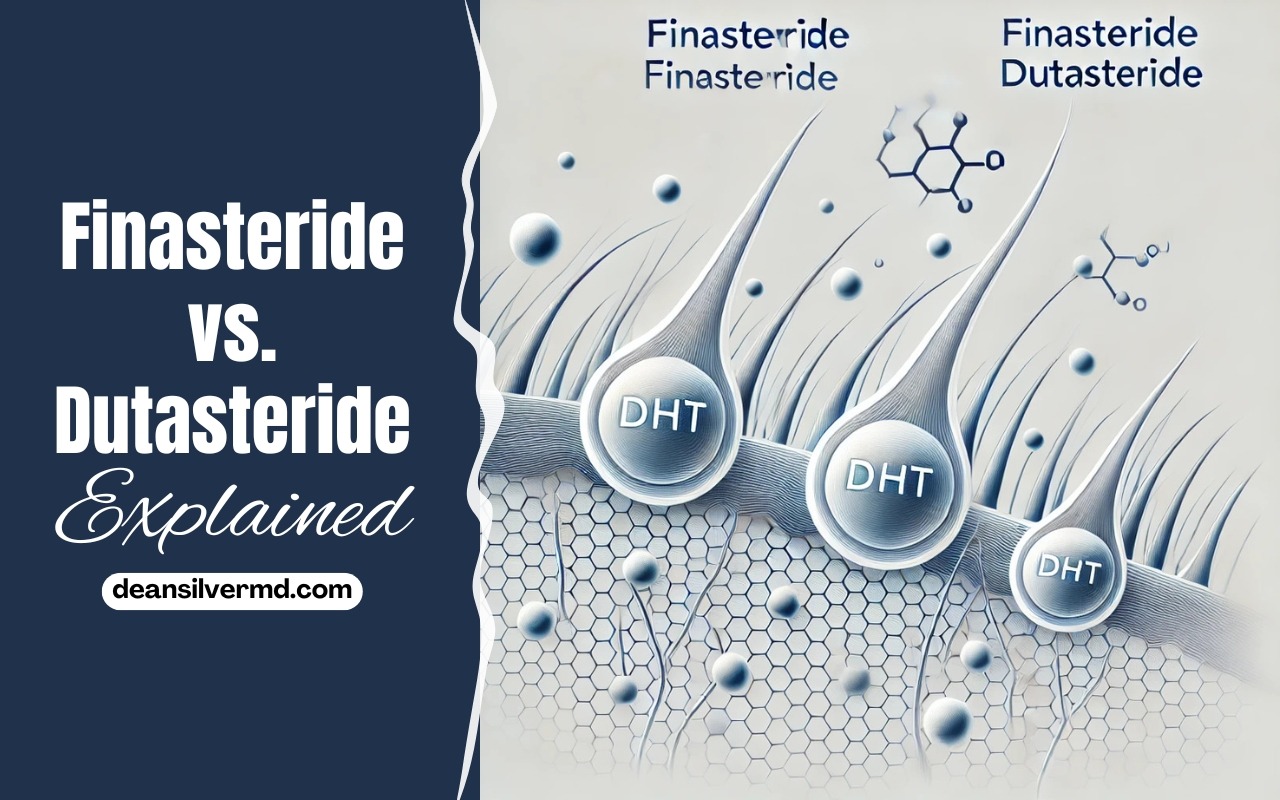
Male pattern baldness (MPB), also known as androgenic alopecia, is primarily driven by genetics and the hormone dihydrotestosterone (DHT). DHT is a by-product of testosterone, produced when the 5-alpha reductase enzyme converts testosterone into DHT.
High DHT levels cause hair follicles to shrink, leading to shorter hair growth cycles and, eventually, the follicles stop producing new hair. Both Finasteride and Dutasteride work by inhibiting this conversion, helping to reduce DHT levels and maintain healthy hair follicles.
Finasteride is highly effective for slowing hair loss and stimulating regrowth, especially in the early stages of MPB. Clinical studies indicate that consistent use of 1 mg daily can significantly improve hair density within 6 to 12 months.
Dutasteride offers a stronger alternative, particularly for advanced hair loss cases. Research indicates that Dutasteride is 3x more effective than Finasteride in inhibiting type 2 5-alpha reductase and over 100x more effective in inhibiting type 1 5-alpha reductase. Participants in clinical trials experienced substantial hair regrowth and a reduction in thinning hair within 24 weeks.
Both Finasteride and Dutasteride may cause:
For readers at DeanSilverMD.com, the right choice between Finasteride and Dutasteride depends on:
Related: Blue Salt Trick for Erectile Dysfunction
*These statements have not been evaluated by the Food and Drug Administration. This product is not intended to diagnose, treat, cure, or prevent any disease. Always consult with a qualified healthcare professional before starting any new supplement or health program, especially if you have existing medical conditions or take prescription medications.
This article is for general information purposes only and does not constitute medical advice. Consult your doctor or qualified healthcare provider before making changes to your health routine.