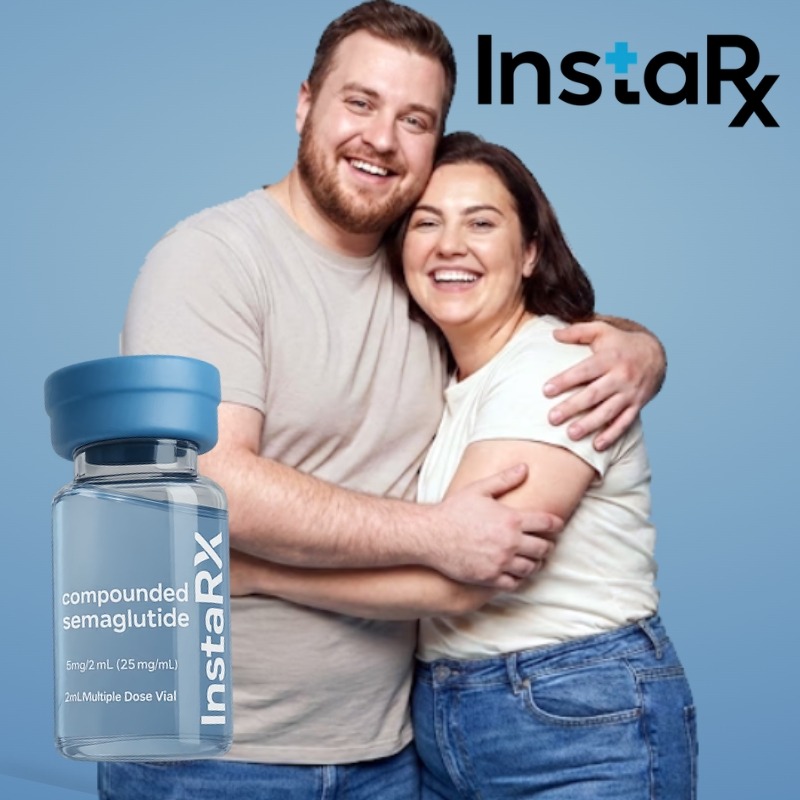
InstaRx GLP-1 Weight Loss offers a convenient, telehealth-based approach to medically supervised weight management. Through a simple online intake, users are evaluated by licensed providers who may prescribe GLP-1 treatment when appropriate. The program includes pharmacy fulfillment, discreet home delivery, and ongoing support to help you stay on track. Designed for adults seeking a structured, clinician-guided option, InstaRx prioritizes accessibility and ease without compromising professional oversight. If you’re looking for a streamlined way to explore prescription weight loss solutions from home, InstaRx provides a modern, patient-focused experience tailored to your needs. Results vary and require medical approval.
Description
The demand for medically supervised weight loss solutions has accelerated significantly in recent years, driven by increased awareness of obesity-related health risks and the emergence of GLP-1–based treatments. As more individuals seek clinically guided options beyond traditional diet and exercise, telehealth platforms have stepped in to bridge the gap between accessibility and medical oversight.
InstaRx is one such platform, positioning itself as a fully online solution for individuals exploring prescription-based weight management. By combining digital intake, licensed provider evaluations, pharmacy fulfillment, and ongoing support, it reflects a broader shift toward remote, patient-centered healthcare delivery.
However, increased adoption also brings increased scrutiny—especially in high-risk categories like weight loss and telemedicine, where accuracy, transparency, and regulatory compliance are essential.
This guide provides a deeper look into how InstaRx’s GLP-1 program works, what patients should understand before starting, and how it fits into the evolving landscape of telehealth weight loss solutions in 2026.
What Is InstaRx GLP-1 Weight Loss?
InstaRx offers a telehealth-based weight management program designed to connect eligible individuals with licensed medical providers who may prescribe GLP-1 medications when clinically appropriate.
Unlike traditional in-person clinics, InstaRx operates entirely online, allowing patients to complete each step—from intake to treatment delivery—remotely.
Core Model Overview
The InstaRx system follows a structured, multi-step process:
- 100% Online Intake Process
Patients begin by completing a digital health questionnaire that includes medical history, current conditions, and weight-related goals. - Licensed Provider Evaluation
A qualified healthcare provider reviews the submitted information to determine whether the individual is a candidate for GLP-1 treatment. - Prescription (If Medically Appropriate)
If approved, a prescription is issued based on the provider’s clinical judgment. - Pharmacy Fulfillment
Prescriptions are sent to licensed pharmacy partners for preparation and shipment. - Ongoing Patient Support
Users may receive continued support, which can include communication channels for questions or treatment adjustments.
This model reflects a growing trend in digital healthcare: reducing friction in accessing medical services while maintaining regulatory safeguards through licensed professionals.
Why Telehealth Weight Loss Is Growing
The expansion of platforms like InstaRx is not случай—it is driven by several converging factors:
1. Accessibility and Convenience
Traditional weight loss programs often require multiple in-person visits, which can be time-consuming and geographically limiting. Telehealth removes these barriers by enabling access from home.
2. Increased Awareness of Medical Weight Management
There is growing recognition that weight management is not solely behavioral—it can also involve hormonal, metabolic, and physiological components.
3. Demand for Structured, Clinically Guided Programs
Consumers are increasingly seeking provider-guided solutions rather than self-directed approaches, especially when dealing with long-term weight challenges.
4. Advancements in Digital Health Infrastructure
Secure platforms now support remote consultations, prescription workflows, and patient communication, making telehealth a viable alternative to traditional care.
Understanding GLP-1 Medications
To fully understand InstaRx’s offering, it’s essential to first understand what GLP-1 medications are and how they function.
What Are GLP-1 Receptor Agonists?
GLP-1 (glucagon-like peptide-1) receptor agonists are a class of medications originally developed for the management of type 2 diabetes. Over time, they have also been studied and used in weight management under specific medical conditions.
How GLP-1 Medications Work
GLP-1 medications affect several biological pathways involved in appetite and metabolism:
- Appetite Regulation
They interact with areas of the brain that influence hunger and satiety, which may help reduce food intake. - Slower Gastric Emptying
Food remains in the stomach longer, which can contribute to a prolonged feeling of fullness. - Blood Sugar Support
They help regulate insulin and glucose levels, which may play a role in overall metabolic balance.
These combined effects are why GLP-1 medications are often considered in medically supervised weight management plans.
InstaRx Platform Overview
InstaRx positions itself as a fully digital, telehealth-based platform designed to simplify access to medically supervised weight management. Rather than requiring in-person consultations, the platform integrates evaluation, prescription, and fulfillment into a streamlined online experience.
This approach reflects a broader healthcare shift toward remote-first care models, where patients can engage with licensed providers and receive treatment recommendations without the logistical barriers of traditional clinics.
Key Features Highlighted
1. Fully Online Access
One of InstaRx’s primary differentiators is its end-to-end digital experience.
Patients begin by completing a structured online intake form, which typically includes:
- Medical history
- Current health conditions
- Medications
- Weight-related goals
This eliminates the need for in-person appointments, making the process more accessible for individuals with limited time, mobility constraints, or geographic barriers.
However, while convenience is a major advantage, it also places greater importance on accurate and complete self-reported information, as providers rely on this data for clinical decision-making.
2. Licensed Provider Review
After submission, the intake information is evaluated by a licensed healthcare provider.
This step is critical for both safety and compliance. The provider’s role includes:
- Reviewing medical history and risk factors
- Determining whether GLP-1 treatment is appropriate
- Identifying potential contraindications or concerns
Importantly, not all applicants may be approved, as eligibility is based on clinical judgment—not consumer demand.
This reinforces that InstaRx functions as a medical access platform, not a direct-to-consumer medication seller.
3. Pharmacy Fulfillment
If a prescription is issued, it is transmitted to a licensed pharmacy partner for fulfillment.
Key elements of this step include:
- Medication preparation (standard or compounded, depending on availability and provider decision)
- Quality control within pharmacy regulatory standards
- Direct-to-door delivery in discreet packaging
Compliance note:
If compounded medications are used, it should be clearly disclosed that:
Compounded medications are not reviewed or approved by the FDA.
Shipping timelines, packaging standards, and pharmacy accreditation may vary, so transparency at this stage is essential for patient trust.
4. Ongoing Support
InstaRx highlights 24/7 patient support as part of its offering, which may include access to assistance channels for general questions or guidance.
This support can help patients:
- Navigate the platform
- Address logistical concerns (e.g., orders, delivery)
- Receive general guidance related to their program
However, it is important to distinguish between:
- Customer support (administrative/logistical)
- Clinical support (medical guidance from providers)
Not all support interactions necessarily involve direct communication with a licensed medical professional.
What “Medically Supervised” Actually Means
This is one of the most important—and often misunderstood—terms in telehealth weight loss programs.
Why This Matters
The phrase “medically supervised” can imply different levels of care depending on the platform. Without clarification, users may assume continuous monitoring or real-time physician oversight, which is not always the case.
To remain compliant and accurate, it’s essential to define what supervision includes—and what it does not.
Practical Definition in a Telehealth Context
In platforms like InstaRx, “medically supervised” typically refers to provider involvement at key decision points, rather than continuous oversight.
This may include:
- Initial Medical Screening
A review of patient-provided health information to assess baseline eligibility. - Eligibility Assessment
Determination of whether GLP-1 treatment is appropriate based on clinical criteria. - Prescription Oversight
A licensed provider authorizes and manages the prescription when applicable. - Periodic Check-Ins
Follow-up interactions may occur, but frequency and format can vary depending on the provider and program structure.
What It Does NOT Automatically Mean
To avoid misinterpretation:
“Medically supervised” does not necessarily mean:
- Continuous real-time monitoring
- Daily physician interaction
- In-person evaluations
- Emergency medical oversight
Patients should not assume a level of care beyond what is explicitly provided by the platform.
Why Clarification Is Critical
Clear communication around supervision helps:
- Set realistic expectations
- Reduce patient confusion
- Improve trust and transparency
- Ensure regulatory compliance in a YMYL category
Ambiguity in this area is one of the most common compliance risks in telehealth marketing.
Recommendation: Define Scope and Frequency
For both users and content creators, it’s important to clarify:
- How often providers review patient progress
- Whether follow-ups are scheduled or on-demand
- What type of support is clinical vs administrative
- How medication adjustments are handled
Providing this level of detail not only strengthens compliance but also enhances user confidence in the program.
Weight Loss Outcomes: What Can You Realistically Expect?
This is where most brands overreach—and where compliance matters most.
What we can say safely:
Clinical studies on GLP-1 medications have shown:
- Statistically significant weight reduction compared to placebo
- Results vary based on:
- Dosage
- Adherence
- Lifestyle factors
- Individual biology
What we should NOT say:
- Guaranteed weight loss
- Fixed timelines (e.g., “X lbs in 30 days” without citation)
- Universal outcomes
Compliant framing:
Some individuals using GLP-1 medications under medical supervision may experience weight loss over time. Results vary and depend on multiple factors, including adherence, dosage, and overall health.
The InstaRx Process
Step 1: Online Intake
Users provide medical history, current health status, and weight-related goals.
Step 2: Provider Evaluation
A licensed provider reviews the information to determine eligibility.
Step 3: Prescription Decision
If appropriate, a prescription is issued.
Step 4: Pharmacy Fulfillment
Medication is shipped directly to the patient.
Step 5: Ongoing Support
Patients may access support for questions or adjustments.
Pricing Transparency
InstaRx emphasizes:
- “Affordable pricing”
- “No hidden fees”
Safety Considerations
GLP-1 medications are not suitable for everyone.
Potential considerations include:
- Pre-existing medical conditions
- Medication interactions
- Gastrointestinal side effects
- Long-term usage implications
Required disclaimer:
GLP-1 medications require a prescription and are not appropriate for all individuals. A licensed provider must determine eligibility.
Compounded Medications: What You Need to Know
If InstaRx uses compounding pharmacies:
Key facts:
- Compounded medications are customized formulations
- Not FDA-approved
- May be used when commercial drugs are unavailable or unsuitable
Required disclosure:
Compounded GLP-1 medications are not reviewed or approved by the FDA.
This is non-negotiable for compliance.
Telehealth Weight Loss: Why It’s Growing
The rapid growth of telehealth-based weight loss platforms like InstaRx reflects a broader transformation in how healthcare is accessed, delivered, and experienced. What was once limited to in-person consultations has evolved into a more flexible, digitally enabled model that aligns with modern consumer expectations.
Several key factors are driving this shift:
Increased Demand for Convenience
Today’s patients increasingly prioritize accessibility and efficiency. Traditional weight loss programs often require multiple in-person visits, long wait times, and scheduling constraints.
Telehealth platforms remove many of these barriers by allowing individuals to:
- Complete evaluations from home
- Avoid travel and clinic wait times
- Access care across wider geographic areas
This convenience can be especially valuable for individuals balancing work, family responsibilities, or limited access to local providers.
Reduced Stigma Around Weight Management
Weight management has historically carried social stigma, which may discourage individuals from seeking help in traditional clinical settings.
Telehealth offers a more private, self-directed entry point. Patients can:
- Complete assessments discreetly
- Engage with providers without face-to-face pressure
- Explore treatment options at their own pace
This increased privacy may encourage more individuals to consider medically guided solutions.
Expansion of Telemedicine Infrastructure
The broader adoption of telemedicine—accelerated by global healthcare shifts—has made remote care more viable and widely accepted.
Advancements include:
- Secure digital health platforms
- Streamlined prescription workflows
- Improved patient-provider communication tools
As a result, telehealth is no longer seen as a temporary alternative but as a long-term component of healthcare delivery.
Greater Awareness of GLP-1 Treatments
Public awareness of GLP-1–based medications has increased significantly, particularly as these treatments have been studied and used in weight management under specific conditions.
This awareness has led to:
- Increased patient interest in medically supervised options
- More conversations around metabolic health
- Higher demand for accessible evaluation pathways
However, increased awareness also underscores the importance of accurate education and responsible use under medical supervision.
Pros of InstaRx
When evaluated within the telehealth weight loss landscape, InstaRx offers several potential advantages—particularly for individuals seeking a streamlined, digital-first experience.
Online Convenience
The fully online structure allows patients to move through the process—from intake to delivery—without needing to visit a physical clinic. This can reduce friction and improve accessibility.
Provider-Reviewed Prescriptions
All treatment decisions are made by licensed healthcare providers, ensuring that prescriptions are issued based on clinical evaluation rather than direct consumer request.
This helps maintain a level of medical oversight that aligns with regulatory expectations.
Integrated Pharmacy Fulfillment
By connecting provider evaluation with pharmacy fulfillment, InstaRx creates a more seamless experience. Patients do not need to coordinate separately with external pharmacies, which can simplify the process.
Access to Support Services
Support channels are positioned as part of the platform, allowing users to seek assistance for general questions, logistics, or guidance throughout their experience.
However, the scope of support—particularly clinical vs administrative—should be clearly understood by users.
Limitations to Consider
While telehealth platforms offer convenience, they also come with limitations that should be carefully considered.
Lack of In-Person Evaluation
Without a physical examination, providers rely heavily on self-reported data. This may limit the depth of assessment compared to traditional clinical settings.
For some individuals, in-person care may provide a more comprehensive evaluation.
Variability in Provider Interaction
The frequency and depth of provider engagement can vary depending on the platform and program structure.
Some users may experience:
- Limited follow-up interactions
- On-demand rather than scheduled check-ins
- Differences in responsiveness
Understanding the level of interaction available is important before starting.
Potential Reliance on Compounded Medications
Some telehealth platforms utilize compounded medications.
Important consideration:
Compounded medications are not reviewed or approved by the FDA for safety, effectiveness, or quality.
Patients should be aware of:
- Differences between compounded and FDA-approved medications
- Why a compounded option may be prescribed
- What this means for safety and regulation
Limited Transparency Without Full Pricing Disclosure
While platforms may promote affordability, the absence of clear, upfront pricing details can make it difficult for users to fully evaluate cost.
Key factors to clarify include:
- Subscription fees vs one-time costs
- Medication pricing vs service fees
- Shipping or additional charges
Transparency in this area is essential for informed decision-making.
Who InstaRx May Be Suitable For
InstaRx may be a fit for certain individuals, particularly those who value convenience and are comfortable with telehealth-based care.
Potentially Suitable For:
- Adults seeking medically supervised weight management
Individuals looking for provider-guided options rather than self-directed approaches. - People comfortable using digital healthcare platforms
Those who are familiar with online forms, remote communication, and virtual care models. - Patients who prefer home delivery of prescriptions
Individuals who value discreet, direct-to-door medication fulfillment. - Those with straightforward medical profiles
Patients without complex conditions may find telehealth evaluation sufficient.
Who Should Be Cautious
Telehealth weight loss programs are not ideal for everyone. Certain individuals may benefit from more traditional, in-person care.
Use Caution If You:
- Have complex or multiple medical conditions
These cases may require more comprehensive evaluation and monitoring. - Require close, ongoing medical supervision
Individuals needing frequent adjustments or monitoring may prefer in-person care. - Prefer or require FDA-approved branded medications only
If avoiding compounded medications is a priority, this should be confirmed before starting. - Are unsure about self-reporting health information accurately
Since telehealth relies on user-provided data, accuracy is essential.
Final Takeaway
InstaRx is part of a rapidly expanding category of telehealth platforms that aim to make medically supervised weight management more accessible through digital-first solutions.
Its appeal lies in convenience, streamlined processes, and the ability to connect patients with licensed providers without traditional barriers.
However, in a high-risk YMYL category like weight loss, the long-term success of any platform depends on more than accessibility alone.
The True Differentiators Are:
- Clarity in communication
Patients should understand exactly what is being prescribed and why. - Transparency in eligibility and pricing
Clear expectations help build trust and reduce confusion. - Disclosure of risks and limitations
Including differences between compounded and FDA-approved medications. - Realistic framing of outcomes
Avoiding exaggerated claims while emphasizing individualized results.
Bottom Line
Telehealth weight loss platforms like InstaRx can provide a structured and accessible entry point into medically supervised care—but they are most effective when paired with informed decision-making, clear expectations, and ongoing provider guidance.
Related products
-
Sale!

Baobab Bliss
Original price was: $147.00.$69.00Current price is: $69.00. Buy From this Official Website -

Weight Care
$399.00 Buy From The Official Website -

FitSpresso Coffee Loophole
$59.00 Buy From The Official Website -
Sale!

Zotrim
Original price was: $69.99.$59.99Current price is: $59.99. Buy From The Official Website